



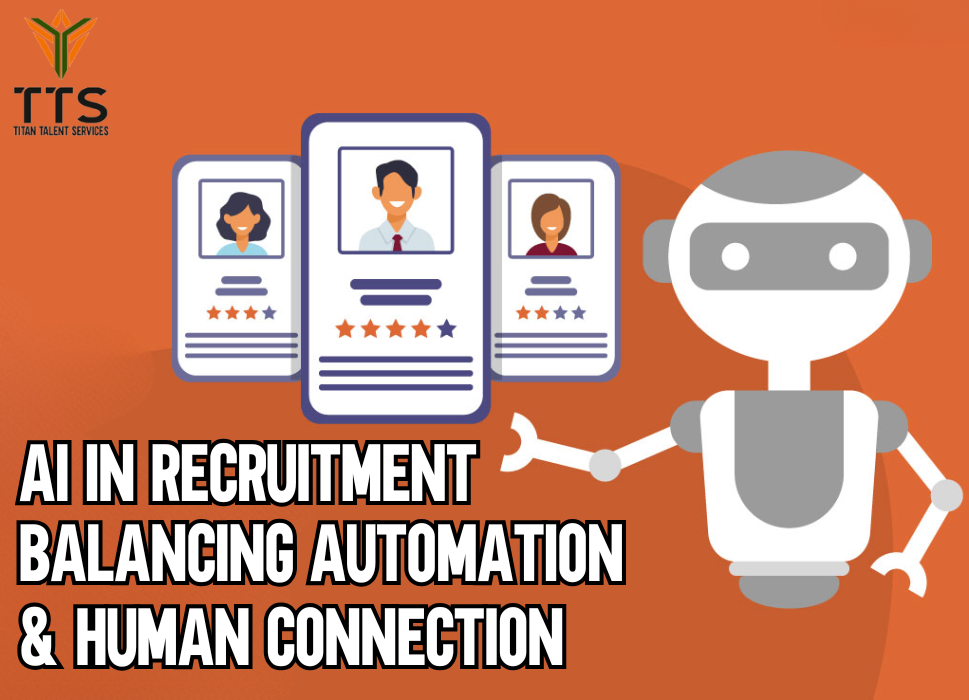
AI in Recruitment | Balancing Automation & Human Connection
At Titans Talent Services, we believe in integrating AI with human intuition to create a recruitment process that is both efficient and empathetic. In this blog, we explore the role of AI in recruitment, its benefits, challenges, and strategies to strike the perfect balance between automation and human interaction.
Role of AI in Modern Day Recruitment
AI has revolutionized recruitment by automating repetitive tasks, analyzing vast amounts of data, and providing insights to improve hiring decisions. Some of the most common AI applications in recruitment include:
AI-Powered Resume Screening
Traditional resume screening is time-consuming and prone to bias. AI-driven applicant tracking systems (ATS) scan resumes, extract relevant information, and rank candidates based on qualifications and experience. This reduces hiring time and ensures that only the most relevant applications reach human recruiters.
Chatbots for Candidate Engagement
AI-powered chatbots engage with candidates by answering FAQs, scheduling interviews, and providing updates on application status. This enhances the candidate experience by offering instant responses, improving communication, and reducing administrative workload.
Predictive Analytics for Better Hiring Decisions
AI analyzes historical hiring data to predict which candidates are more likely to succeed in a role. Machine learning algorithms assess attributes such as skills, cultural fit, and career progression patterns to make data-driven hiring recommendations.
AI in Video Interviews
AI-powered video interview platforms assess candidates’ speech patterns, facial expressions, and tone of voice to provide additional insights. These tools help recruiters identify potential red flags and evaluate soft skills more effectively.
Automated Job Matching
AI enhances job matching by analyzing job descriptions and candidate profiles to recommend the best fits. It ensures recruiters focus on candidates who align closely with job requirements, increasing hiring accuracy.
Benefits of AI in Recruitment
The integration of AI in recruitment offers numerous advantages for businesses in terms of management and other operations in the following ways:
1. Increased Efficiency
AI automates repetitive tasks such as resume screening, scheduling, and follow-ups, allowing recruiters to focus on strategic decision-making and relationship-building.
2. Reduced Hiring Bias
AI-driven algorithms assess candidates based on data rather than subjective opinions, helping reduce unconscious bias and promoting diversity in hiring.
3. Enhanced Candidate Experience
AI-powered chatbots and automated communications ensure candidates receive timely updates, improving engagement and reducing frustration during the hiring process.
4. Cost Savings
By streamlining recruitment workflows, AI reduces the time and resources spent on hiring, leading to cost-effective talent acquisition.
5. Data-Driven Decision Making
AI provides valuable insights into hiring trends, candidate behaviors, and job market dynamics, enabling organizations to make informed recruitment decisions.
Challenges of AI in Technical Recruitment Process
Despite its benefits, AI-driven recruitment also comes with challenges that must be addressed to maintain a fair and effective hiring process.
1. Lack of Human Connection
Automating too much of the recruitment process can make candidates feel undervalued. A purely AI-driven approach may fail to capture human qualities such as personality, motivation, and cultural fit.
2. Bias in AI Algorithms
AI is only as unbiased as the data it is trained on. If historical hiring data contains biases, AI can perpetuate or even amplify them, leading to unfair hiring decisions.
3. Over-Reliance on AI Recommendations
Recruiters must use AI as a tool rather than a replacement for human judgment. Blindly following AI-generated recommendations can result in missed opportunities and poor hiring decisions.
4. Privacy and Data Security Concerns
AI recruitment tools collect and analyze large amounts of personal data. Ensuring compliance with data protection regulations and safeguarding candidate information is crucial.
5. Resistance to AI Adoption
Many recruiters and hiring managers may be hesitant to embrace AI due to fears of job displacement or skepticism about AI’s effectiveness. Proper training and education are essential to encourage adoption.
Balancing Automation and Human Connection in Recruitment
At Titans Talent Services, we believe that AI should enhance, not replace, human involvement in recruitment. Here are some strategies to achieve the perfect balance between automation and personal interaction:
1. Use AI to Handle Repetitive Tasks, But Keep Human Oversight
AI should be leveraged for time-consuming tasks like resume screening, initial candidate communication, and scheduling. However, human recruiters must oversee the process, ensuring AI-driven decisions align with company values and hiring goals.
2. Maintain Personalized Communication
While AI chatbots are great for answering FAQs and scheduling interviews, human recruiters should personally interact with shortlisted candidates. Personalized engagement fosters trust and improves candidate relationships.
3. Train AI to Reduce Bias, Not Reinforce It
Regularly audit AI recruitment tools to identify and mitigate bias in hiring algorithms. Training AI with diverse data sets and using inclusive hiring practices help promote fairness.
4. Blend AI Insights with Human Intuition
AI-generated recommendations should complement human decision-making. Recruiters must assess candidates beyond AI scores, considering qualities like adaptability, leadership potential, and cultural fit.
5. Provide Human Touchpoints Throughout the Hiring Process
Ensure that human interaction is integrated at key stages, such as final interviews, offer negotiations, and onboarding. This reinforces a sense of connection and helps candidates feel valued.
6. Educate Recruiters on AI’s Role
Provide training on how AI works, its limitations, and best practices for using AI-driven tools. This ensures recruiters feel empowered rather than threatened by technology.
Future of AI in Recruitment
As AI technology continues to evolve, its role in recruitment will become even more sophisticated. Here are some emerging trends that will shape the future of AI in hiring:
1. AI-Powered Skills Assessment
AI-driven skills assessment platforms will provide more accurate evaluations of candidates’ abilities, reducing reliance on traditional resumes.
2. Emotional AI for Better Candidate Analysis
Advancements in emotional AI will allow recruiters to assess candidates’ emotional intelligence and personality traits with greater accuracy.
3. AI-Driven Talent Marketplaces
AI-powered platforms will facilitate better job-candidate matches, improving hiring efficiency and reducing recruitment costs.
4. Virtual Reality (VR) in Recruitment
VR and AI combined will create immersive candidate experiences, such as virtual job previews and realistic job simulations.
5. Ethical AI Regulations in Hiring
Governments and organizations will implement stricter ethical guidelines to ensure AI-driven hiring remains fair, transparent, and unbiased.
FAQs
How is AI transforming the recruitment process?
AI is streamlining recruitment by automating repetitive tasks such as resume screening, candidate sourcing, and initial interview scheduling. It enables recruiters to process large volumes of applications quickly and identify top talent based on predefined criteria. However, AI must be used carefully to ensure fairness and prevent bias in hiring decisions.
Can AI completely replace human recruiters?
No, AI cannot replace human recruiters entirely. While it enhances efficiency by handling data-driven tasks, recruitment involves relationship-building, emotional intelligence, and cultural fit assessments, which require human judgment. The best approach is a hybrid model where AI handles administrative tasks, allowing recruiters to focus on strategic hiring decisions and personal interactions.
What are the risks of using AI in recruitment?
AI in recruitment poses risks such as algorithmic bias, data privacy concerns, and potential over-reliance on automation. If AI models are trained on biased data, they may unintentionally discriminate against certain candidates. Employers must ensure AI tools are transparent, regularly audited, and supplemented with human oversight to maintain ethical hiring practices.
How can recruiters balance AI automation with human connection?
Recruiters can balance AI and human connection by using AI for efficiency while prioritizing human interactions in critical decision-making stages. AI can handle resume screening and scheduling, but recruiters should conduct personalized interviews, provide feedback, and build relationships with candidates. A candidate-centric approach ensures a more engaging and fair hiring experience.
How does AI improve candidate experience in recruitment?
AI enhances the candidate experience by offering faster responses, reducing application processing time, and providing tailored job recommendations. Chatbots and AI-driven communication tools keep candidates informed throughout the hiring process. However, excessive automation without human touch can make candidates feel disconnected, so maintaining personal engagement is essential.
What industries benefit the most from AI-driven recruitment?
AI-driven recruitment benefits industries with high-volume hiring needs, such as technology, healthcare, retail, and customer service. These sectors require fast, efficient talent acquisition processes, making AI an ideal tool for sourcing, screening, and matching candidates. However, human involvement remains critical in industries where soft skills and cultural fit are crucial factors in hiring decisions.
Conclusion
AI is transforming recruitment, offering unparalleled efficiency, cost savings, and data-driven decision-making. However, the human connection remains irreplaceable. At Titans Talent Services, we embrace AI as a powerful ally while ensuring that recruitment remains personal, inclusive, and human-centric.
Balancing automation with human interaction is the key to building stronger employer-candidate relationships, fostering trust, and making the hiring process both efficient and empathetic. By strategically integrating AI while maintaining a personal touch, companies can create a recruitment experience that is both technologically advanced and deeply human.
Would you like to learn more about how Titans Talent Services can help your organization navigate AI-driven recruitment? Get in touch with our expert team today!